




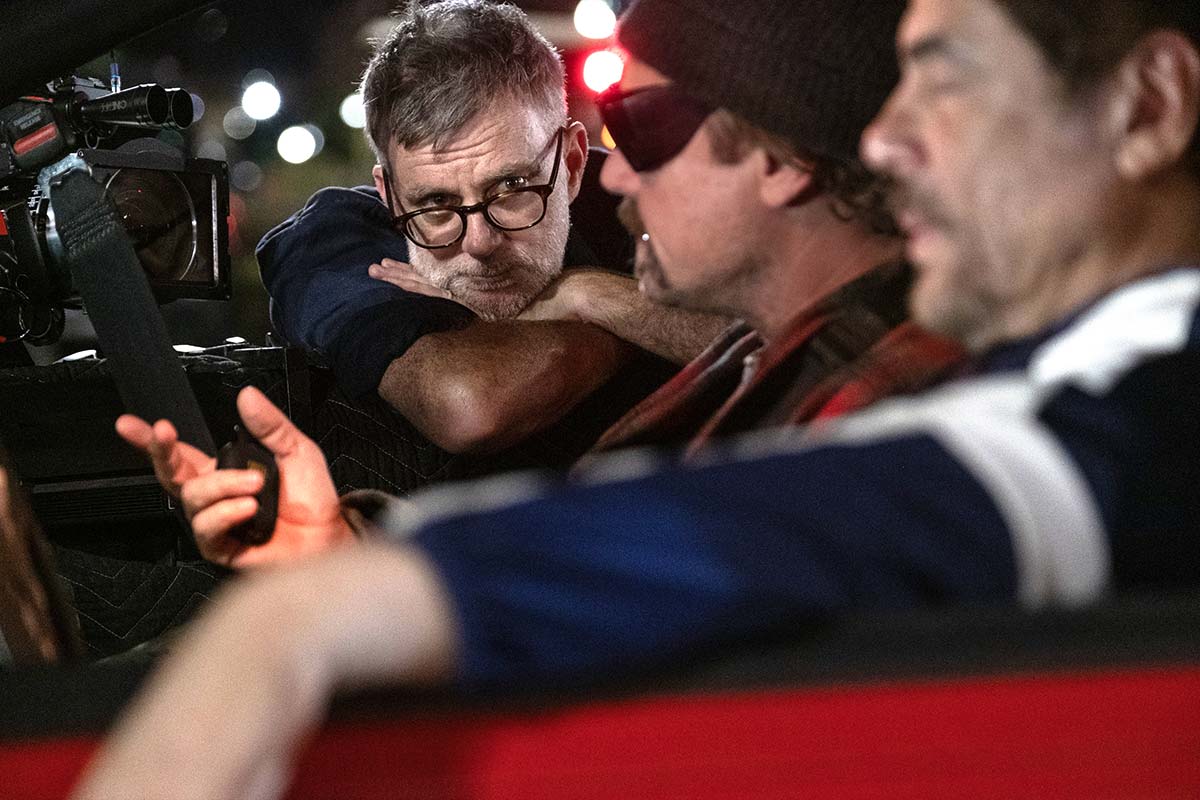
After years of conversation, Paul Thomas Anderson and Leonardo DiCaprio have finally joined forces. Despite talks dating back to the late-’90s—DiCaprio famously passed on “Boogie Nights,” a decision he recently called his greatest career regret in Esquire—“One Battle After Another” marks their first film together. The result feels both inevitable and astonishing: an explosive, unwieldy, yet deeply human epic that balances revolution, farce, and an aching father–daughter bond at its heart.
Anderson stressed the two-decade span of creation in the press notes. “I started working on this story 20 years ago with the goal of writing an action car-chase movie, and I returned to it every two or three years. At the same time, this was in the early 2000s, I had the notion to adapt Thomas Pynchon’s “Vineland,” a book about the 1960s that he wrote in the ’80s. So I was trying to decide what the story meant another 20 years later. The third idea floating around in my mind at the time was a character, a female revolutionary. So really, for 20 years, I had been pulling on all these different threads, and in a way, none of them ever left me. Realistically, for me, “Vineland” was going to be hard to adapt. Instead, I stole the parts that really resonated with me and started putting all these ideas together. With his blessing.”
At the press conference, Anderson added a more candid variation. “I might’ve been noodling around with this and writing it for 20 years,” he said, before laughing at how quickly the project could also turn on a dime. “Benicio del Toro came in to do his sequence, and we wrote the best sequence in the movie in a day and a night at dinner, really. So it’s always evolving.”
“One Battle After Another” is a sprawling saga of revolution, obsession, and family. The story follows Bob Ferguson (DiCaprio), a onetime radical now living in exile with his teenage daughter Willa (Chase Infiniti), as the ghosts of his militant past return in the form of a vengeful Col. Steven J. Lockjaw (Sean Penn). Alongside Perfidia Beverly Hills (Teyana Taylor), Deandra (Regina Hall), and Sensei Sergio St. Carlos (del Toro), Bob and his makeshift family face down authoritarian forces in a Northern California countercultural stronghold. Fierce political clashes collide with offbeat comedy and tender family drama, anchored by Anderson’s signature tonal dexterity and shot in operatic VistaVision by cinematographer Michael Bauman.
For DiCaprio, the contradictions in Anderson’s script were irresistible. “The humanity of the character… the unexpected choices,” he said. “You think he’s going to be this hero who can resurrect and use the tools from his revolutionary past… but his real heroism is that he just keeps relentlessly moving forward to protect his daughter.” He added: “I love the idea that you also expect this character is going to use massive espionage skills, but he cannot remember the password. It’s just a brilliant setup for what is ultimately a very flawed hero dynamic that he created. And it was a blast to make the movie. It was great to go on that journey and discover it as we went along.”
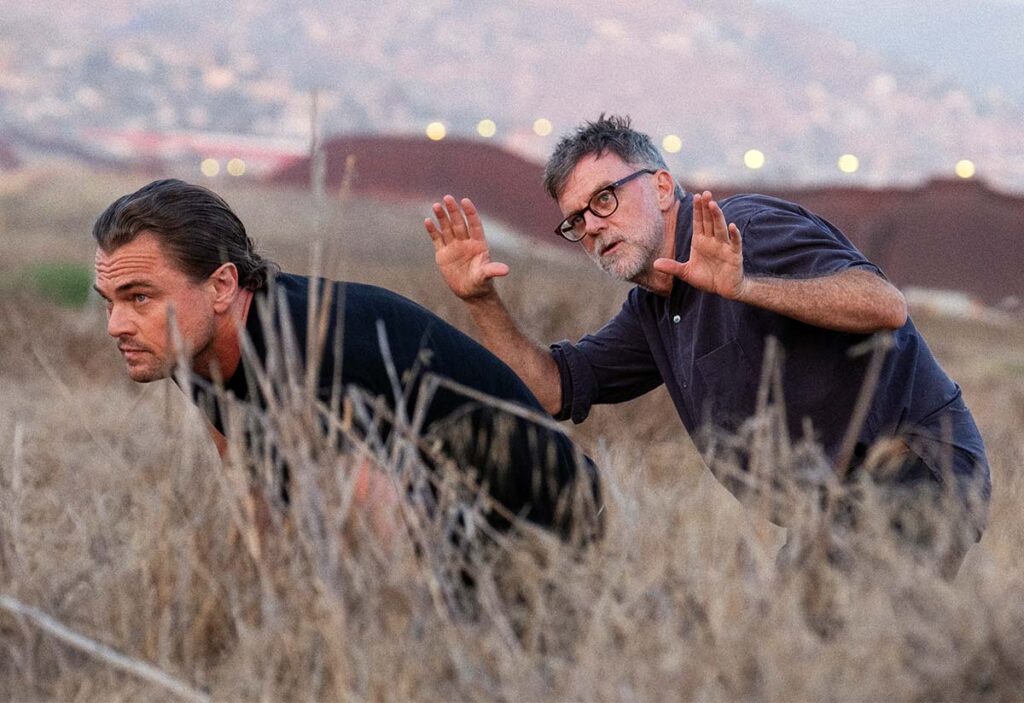
DiCaprio also praised Anderson’s willingness to start his story off-kilter. “I love this slice of life where you find Bob and Willa at the beginning of this movie,” he said. “It’s not a utopian happy-villager setup. It’s a father disconnecting from his daughter. She’s of a different generation, and he’s completely disconnected from her. He’s a disaster of a father, and then suddenly he’s put into this wild circumstance to try to save her. It’s a beautiful bit of writing.” Later, he reflected on the film’s deeper arc: “Only in the last few weeks did we realize that Bob’s heroism is his sheer act of moving forward, of not giving up. I love that concept, and now I really grasp the power of being there for his daughter, and her being affected by his choices. Not just what he did as a revolutionary, but the fact that his past is coming back to haunt him, and now it’s passed to the next generation. That trauma. Paul wrote a beautiful ending about what the next generation will have to face.”
Penn described the script as a tonal high-wire act. “When I read the script the first time, I started giggling at about page three, and then I didn’t go very many pages where that didn’t happen,” he said. “While there are tone shifts and the tone shifts are all recognizable in terms of placement, which approach to that tone in your part of the bigger puzzle makes sense. Having worked briefly with Paul, but knowing Paul a long time and having great faith in him, as we all do… it would be like assuming you could write a song with Brian Wilson. He’s finding the tone and approach, so you find which instruments he wants around and pay attention, and he’ll give you either those little looks or say, ‘I’m going to pretend I never saw that.’ And it’s always very clear.”
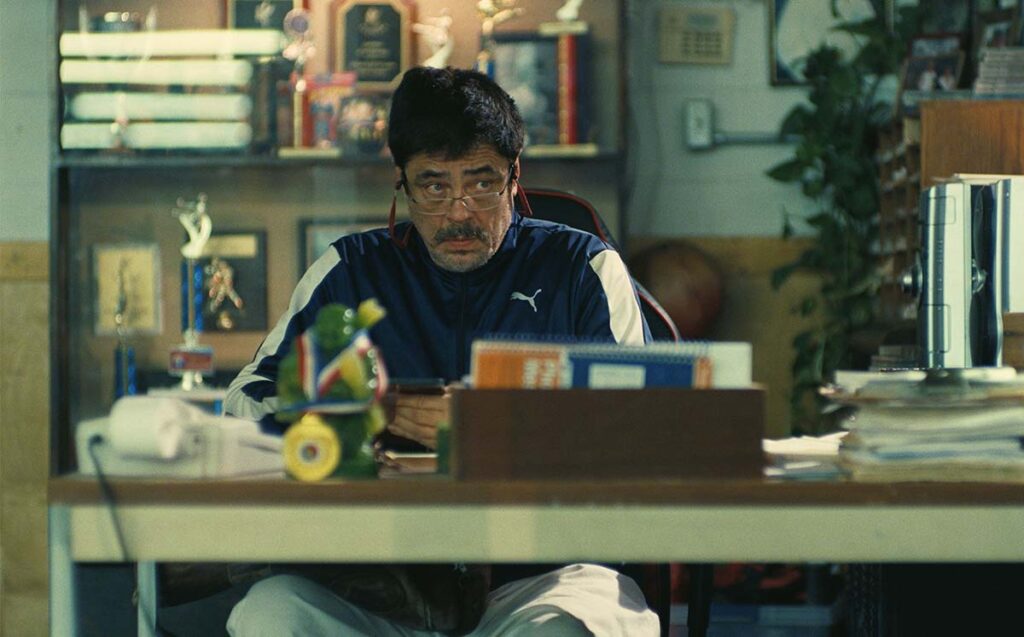
Del Toro, stepping into Anderson’s world again after appearing in “Inherent Vice,” leaned into Sergio’s Zen presence. “Paul writes the line, ocean waves, and somehow I understood it,” he said. “Leo brings tons of energy, so I just danced with it and stayed the anchor in some ways, even though the scenes were packed with movement.” Sergio delivers one of the film’s key grace notes when he counsels Bob that “freedom is no fear.” Del Toro later admitted the part mirrored his own fanhood. “I think I learned that my character was also a fan, and that’s a fan of the [Leo’s character] Rocket Man. And then he takes a little piece with him when he does the selfie with him, a memento. That’s not hard for me to play because I’m actually… I got to thank Paul for the part and be in a movie with two of my oldest heroes in Hollywood, with Sean Penn, Leo and all these new heroes I have now. So I’m a fan, and that was something that I got and I just ran with it.”
Taylor, who plays Perfidia Beverly Hills, earned specific praise from Anderson for her instincts. “She’s really good because she’s also a director enough to know when an accident has happened, and it’s a gift, and you have to listen to it,” Anderson said. “From the smallest thing—we were shooting camera tests and she came in with a broken nail and a band-aid—we both fell in love with it. That’s not a broken nail, that’s a gift. The same thing when her eyelashes were messed up; we had one bad eyelash and said, ‘Well, that’s it too.’ As actors, you can’t come in closed off. You need a plan, but you have to be open and ready to receive, because the opportunities are there if your eyes are open. I found that very early on with Teyana. She was thinking like that, which was the key to working together.”
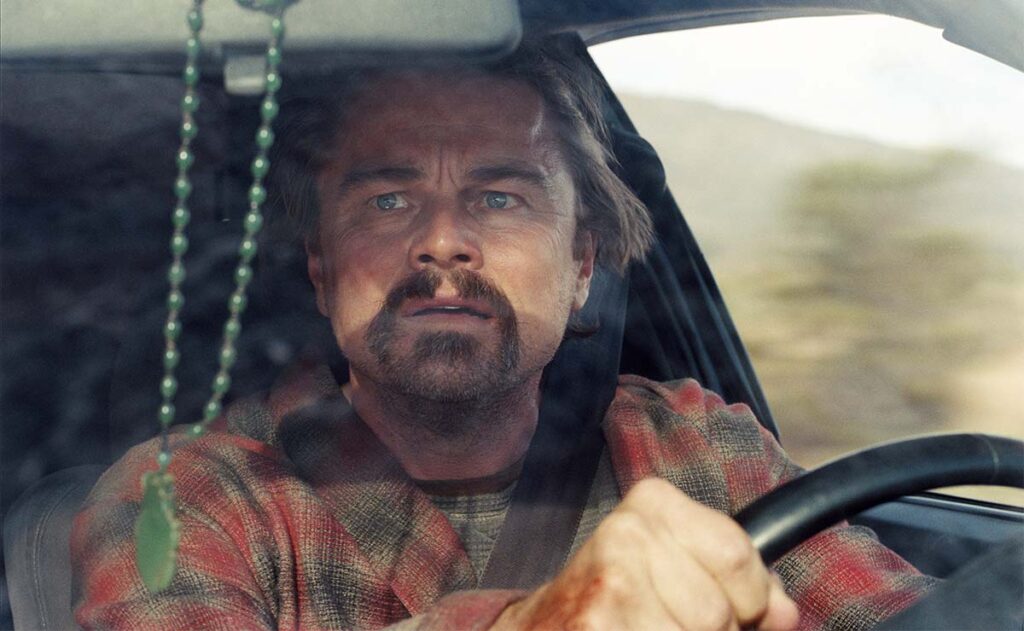
Visually, the film is operatic, shot in VistaVision by Bauman. Anderson evangelizes the format. “3D without the glasses,” he called it. “It can get you inside the actors’ faces… and throw you into an action sequence.” He pointed out its legacy: “It was good enough for Alfred Hitchcock in ‘North by Northwest’ and ‘Vertigo,’ and good enough for John Ford in ‘The Searchers,’ all these fantastic classic films that use this format, we not only associate with brilliant performances, but true cinematic experiences. As ancient as it is, it never should have gone out of style, and it’s really nice to see it back and resurging. The point is to see it gigantic and loud because it’ll deliver.”
DiCaprio backed him: “Everything about this movie is made to have that communal, theatrical experience… I just really hope that people go see this movie in the theaters.”
The music is equally baked in. Longtime collaborator, Radiohead’s Jonny Greenwood, was involved almost from the inception, Anderson explained, shaping the film’s sonic identity even before cameras rolled. “I work with Jonny, and have for many years, so it’s an ongoing collaboration,” he said. “He’s had this script for a long time, so he’s been writing music.” Greenwood’s cues were fed directly into the dailies. “The important part is them hearing the music,” Anderson added. “Sean talks about music as we would watch dailies, and we would be able to play the music that Jonny was writing along with the images. So everybody starts to really get a sense and understanding of the [movie’s] tone. Everybody gets that same music in their bodies. It helps push us all along on a similar journey.”
That constant exposure gave the entire ensemble, from cast to crew, an immediate sense of mood. “Watching an hour of dailies, of cars driving on hills, could be really boring, unless there’s something propulsive behind it,” Anderson said. “So they had a sneak preview of that.” He recalled one key inspiration arriving unexpectedly: “Hearing Steely Dan’s ‘Dirty Work’ on the way to work one morning, I came in and played it for Leo and said, ‘I think, at the last minute here, I found your theme song.’”
DiCaprio admitted he latched onto it instantly: “I think I played that song 50 times.”
For all the riotous humor, harrowing chases, and political heat, “One Battle After Another” resolves as a generational story—a father handing down lessons, a daughter seizing her own path. DiCaprio noted that Bob’s struggle is ultimately defined by resilience. “Bob’s heroism is his sheer act of moving forward, of not giving up,” he said. “Being there for his daughter, and her being affected by his choices. Not only what he did from a revolutionary aspect, but the fact that his past is coming back to haunt him, and now it’s passed on to the next generation.”
The film is also about reckoning. The person you are, the person you realize you’ve become in your stoner fog, and the parent you want to be don’t always align—and the father you want to be is the most challenging role of all. From one generation to the next, the struggle endures. Fierce and unrelenting, Anderson’s epic burns as both incendiary action and tender family drama, alive with humor, conviction, and revolutionary spirit. Viva la revolución.
“One Battle After Another” opens September 26 in theaters domestically (September 24 internationally).